
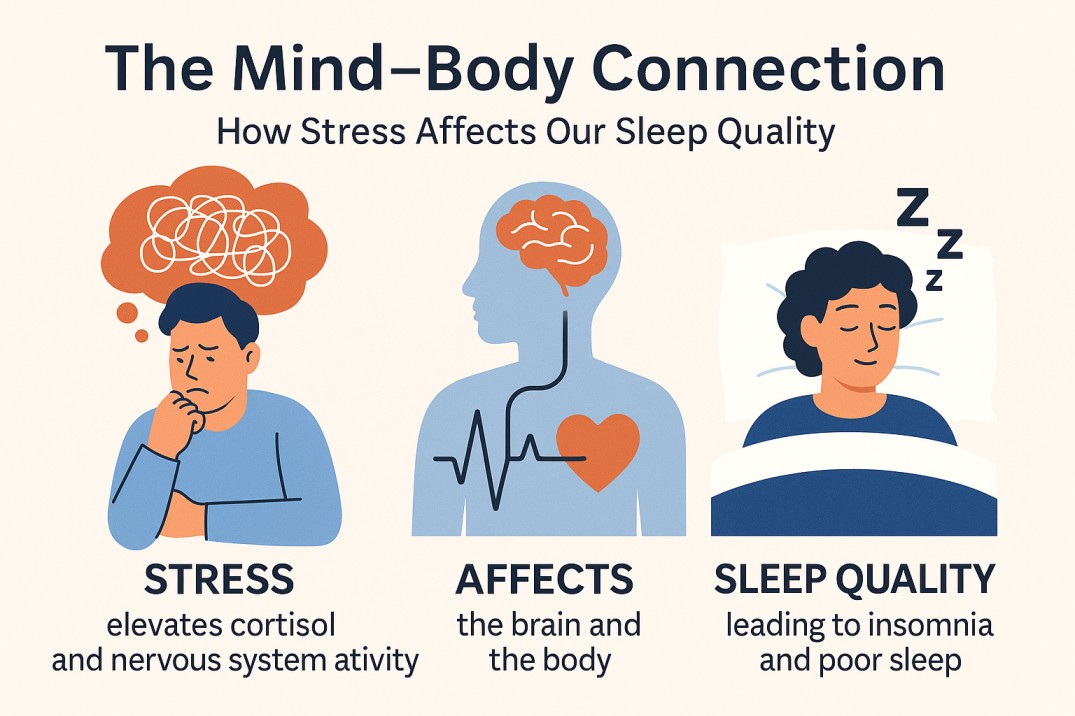
Over time, I noticed that when stress carries into the night—even if I’ve been productive during the day—the following morning brings mental fog, slower decision-making, and reduced focus. It wasn’t lack of sleep hours but poor sleep quality. This led me to question how to balance healthy stress that drives progress versus stress that undermines recovery and performance.
Scientific studies show that unresolved stress elevates cortisol into the night, disrupting circadian rhythm and reducing deep sleep. Even one night of poor-quality sleep impairs executive function by up to 30–40% (Killgore, 2010). Chronic disturbance diminishes emotional regulation, clarity, and productivity—particularly in leadership and high-responsibility roles.
Research distinguishes useful stress (eustress) from harmful stress. When stress remains purpose-driven and time-bound it energizes performance. When it lingers mentally, it shifts from driver to detractor.
Why did Ancient Practices Focused on ‘Closing the Mind’ Before Sleep
Across traditions—Yogic, Zen, Sufi, Christian monastic, Indigenous—all emphasize the act of mentally completing the day before resting.
Common techniques include:
- Slow rhythmic breathing → activates parasympathetic response
- Guided body relaxation → shown to reduce sympathetic nervous system activity
- Evening chanting or soft sound patterns → stabilizes brain wave transition from beta (alert) to alpha/theta (relaxed)
Interestingly, a 2019 clinical trial published in Sleep Health found that mindfulness-based evening rituals can improve sleep latency and efficiency by up to 25% in adults with stress-related insomnia. These weren’t spiritual luxuries—they were neurophysiological resets, centuries before we had the vocabulary.
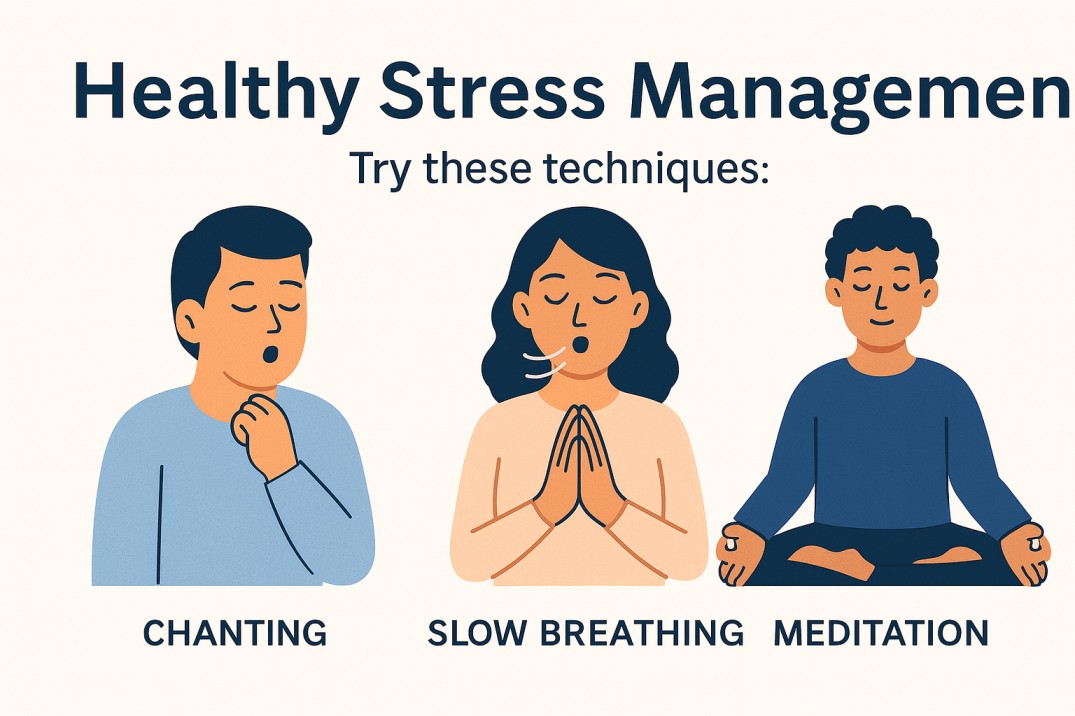
Simple Night Ritual:
• Inhale for 4 counts, exhale for 6, repeat 5 times.
• Mentally say: “The day is complete. What needs attention will meet me clearly tomorrow.”
Reflection Questions:
• What patterns do I notice between stressful evenings and next-day clarity?
• What evening habits silently reintroduce stress?
• What does mental closure at day’s end look like for me?

Scientific References:
– Killgore WDS (2010) Progress in Brain Research.
– Ong et al.
(2019) Sleep Health.
– Wen et al. (2020) Frontiers in Psychology.
– Walker, M. Why We Sleep.
In the next blog I plan to explore Yogic meditation as a tool for mental disengagement and sustainable high performance.